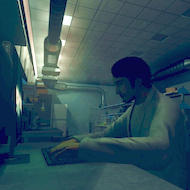
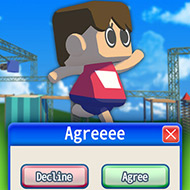
No, I’m not a Human challenges players to survive and solve puzzles while controlling a character that appears human but behaves unpredictably. The game balances stealth, movement, and interaction with an environment that reacts dynamically. Each level contains hidden elements and strange patterns, requiring careful observation and timing. Progress is earned through strategy rather than force, making attention to detail essential.
Character behavior and environment interaction
The core of No, I’m not a Human lies in controlling a character whose actions can confuse opponents or bypass obstacles. Players must learn movement quirks, object interactions, and the timing of events to succeed. Environmental hazards respond differently depending on the sequence of actions, so testing several approaches becomes part of the gameplay. Observation allows players to plan without rushing, which is critical for advancing efficiently in this game.
- Movement control — precise navigation is key to avoiding traps
- Object interaction — some objects trigger hidden mechanisms
- Timing hazards — patterns repeat, allowing prediction
- Observation points — identify safe spots before advancing
- Puzzle sequences — multiple solutions may exist
Puzzles, levels, and hidden pathways
Levels in No, I’m not a Human often contain multi-step puzzles requiring items, switches, or environmental triggers in a specific order. Hidden paths provide shortcuts or extra rewards, encouraging exploration. Players frequently ask whether there is a single correct solution; the answer is no. Creativity and experimentation open multiple ways forward. Using learned patterns while testing unconventional sequences improves both speed and success rate.
- Initial exploration — locate interactive objects
- Sequence execution — combine items and actions logically
- Hazard navigation — avoid traps while progressing
- Advanced routing — discover optional paths for efficiency
Strategies, frequently asked questions, and common mistakes
Players often ask how to anticipate environmental reactions or how to avoid setbacks caused by unexpected triggers. The key is observing the environment repeatedly before committing to movement. Another common question concerns timing: rushing increases mistakes, so measured pace improves success. Some attempt brute force solutions; however, success in No, I’m not a Human depends on thinking through the sequence of actions. Keeping notes on object positions and hazard intervals often prevents repeated errors and increases survival.
No, I’m not a Human emphasizes careful planning and continuous observation. By learning patterns, experimenting with routes, and timing actions, players gradually master levels and discover the best approaches to navigate hazards, unlock puzzles, and progress consistently in this game.